Court records are official documents created and maintained by courts during legal proceedings. These records include case filings, motions, judgments, dockets, transcripts, and evidence logs. They serve as the legal memory of the judicial system, ensuring transparency, accountability, and due process. Every time a case is filed—whether civil, criminal, family, or probate—a permanent record is generated. These records are considered public unless sealed by a judge or protected by law. They are used by attorneys, researchers, journalists, employers, and individuals conducting background checks or verifying legal history.
Access to court records varies by jurisdiction, type of case, and level of court (federal, state, or county). While some records are available online, others require in-person visits or formal requests. Privacy laws, such as those protecting juvenile cases or domestic violence victims, may restrict access. Understanding how to locate, interpret, and obtain these records is essential for anyone involved in legal research, litigation, or personal verification. The process involves knowing where to look, what information is needed, and which legal rules apply.
Types of Court Records
Court records are categorized based on the nature of the case and the court that maintains them. Each type contains specific details relevant to its legal context. Knowing the differences helps users target their search efficiently.
Civil Court Records
Civil court records involve disputes between individuals or organizations, typically over money, property, contracts, or personal rights. These cases do not involve criminal charges but can result in financial judgments or court orders.
- Divorce court records: Include petitions, custody agreements, alimony, and property division.
- Small claims court records: Cover disputes under a monetary threshold, usually $5,000 to $15,000, depending on the state.
- Contract disputes: Involve breaches of agreements, such as unpaid loans or service failures.
- Landlord-tenant cases: Include eviction notices, security deposit disputes, and lease violations.
These records often contain plaintiff and defendant names, case numbers, filing dates, court rulings, and settlement details. In most jurisdictions, civil records are public unless sealed due to sensitive personal information.
Criminal Court Records
Criminal court records document offenses against the state or public, ranging from minor infractions to serious felonies. These records are critical for background checks and legal proceedings.
- Misdemeanors: Include DUIs, petty theft, and simple assault. Punishments are usually fines or short jail terms.
- Felonies: Cover violent crimes, drug trafficking, and major fraud. These can lead to long prison sentences.
- Arrest records: Show date, location, charges, and booking details, even if charges were dropped.
- Probation and parole records: Track compliance with court-ordered supervision.
Criminal records often include the defendant’s name, date of birth, charge codes, arrest date, court appearances, plea, verdict, and sentencing. Expunged or sealed records may not appear in public searches.
Federal Court Records
Federal court records involve cases under federal jurisdiction, such as bankruptcy, immigration, patent disputes, or crimes crossing state lines. These are maintained by the U.S. court system and are generally more centralized.
- Bankruptcy court records: Detail Chapter 7, 11, or 13 filings, debts, assets, and discharge status.
- Immigration court records: Include deportation hearings, asylum requests, and visa appeals.
- Appeals court records: Contain briefs, oral arguments, and decisions from circuit courts.
Federal records are accessible through PACER (Public Access to Court Electronic Records), the official electronic database. Each case has a unique docket number and is searchable by party name, case type, or date.
How to Search Court Records
Searching court records requires knowing the correct tools, required fields, and expected results. Generic advice like “visit the official site” is insufficient. Below are the exact steps for reliable online searches.
Using Online Court Databases
Most states and counties offer online portals for public court records. These tools allow users to search by name, case number, or date. The process is standardized but varies slightly by jurisdiction.
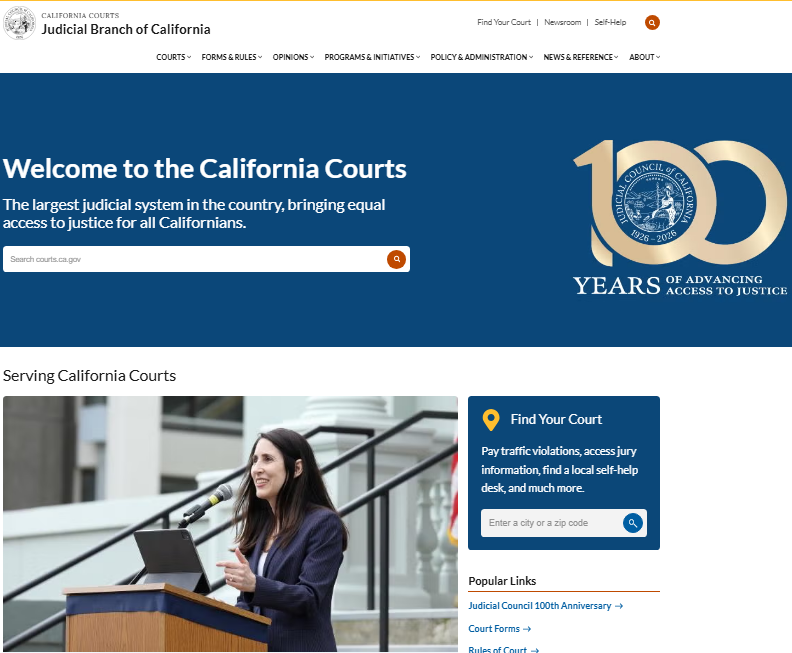
- Go to the official court website for your county or state. For example, the California Courts https://www.courts.ca.gov provides links to all county systems.
- Locate the “Case Search” or “Public Access” section. This is usually in the top menu or under “Online Services.”
- Type the full name of a party in the “Party Name” field. Use last name first, followed by a comma and first name (e.g., Smith, John).
- If searching by case number, enter the full number, including dashes and letters in the “Case Number” field (e.g., CIV-2023-001234).
- Click the “Search” button. Do not use special characters unless specified.
The system will return a list of matching cases. Each result shows the case number, court location, case type, filing date, and status. Clicking a result opens a detailed docket with all filings, hearings, and judgments.
Searching by Name vs. Case Number
The method of search affects accuracy and the scope. Name searches cast a wide net but may return many matches. Case number searches are precise but require prior knowledge.
- Name search: Best for locating all cases involving a person. Enter the exact spelling. Middle initials help narrow results.
- Case number search: Ideal for tracking a specific case. Found on court notices, summons, or prior records.
- Date range search: Useful for finding cases filed within a period. Enter start and end dates in MM/DD/YYYY format.
For example, in Riverside County, typing “Doe, Jane” in the “Party Name” field returns all civil and criminal cases under that name. Adding a date range like 01/01/2020 to 12/31/2023 filters results to that period. The output includes case number, court department, and next hearing date.
The Search Results
Search results display structured data points that help users assess relevance. Knowing what each field means prevents confusion.
Status: Current phase: Active, Closed, Appealed, or Dismissed.
| Field | Description |
| Case Number | Unique identifier assigned at filing (e.g., 23CV012345). |
| Case Type | Classification such as Civil, Criminal, Family, or Probate. |
| Filing Date | Date the case was officially submitted to the court. |
| Court Location | Physical courthouse where the case is heard. |
| Next Hearing | Scheduled date and time for upcoming proceedings. |
Each result links to a full docket sheet. This document lists every action in the case: motions filed, hearings held, evidence submitted, and final judgment. Users can download or print these sheets for personal use.
Accessing County Court Records
County courts handle the majority of civil and criminal cases in the U.S. Their records are maintained locally and often digitized. Access methods vary by county but follow similar patterns.
California County Examples
California provides a model for county-level access. Each county operates its own online portal with specific features and data availability.
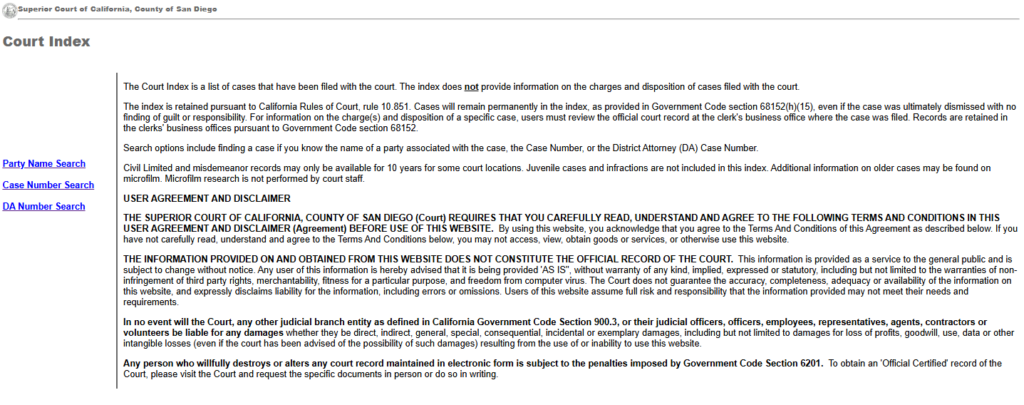
- San Diego County: Offers online case search through the San Diego Court Index https://courtindex.sdcourt.ca.gov/CISPublic/. Enter a name or case number. Results show case type, filing date, and status. Criminal records include charge codes and bail amounts.
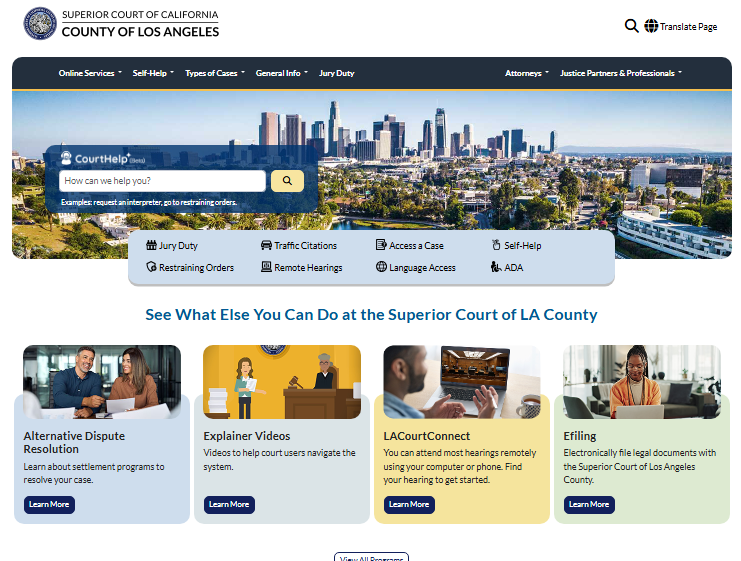
- Los Angeles County: Uses the LA Court Case Search https://www.lacourt.ca.gov/home tool. Type a name in the “Party Name” field. The system returns civil, family, and probate cases. Criminal records require a separate search via the Sheriff’s site.
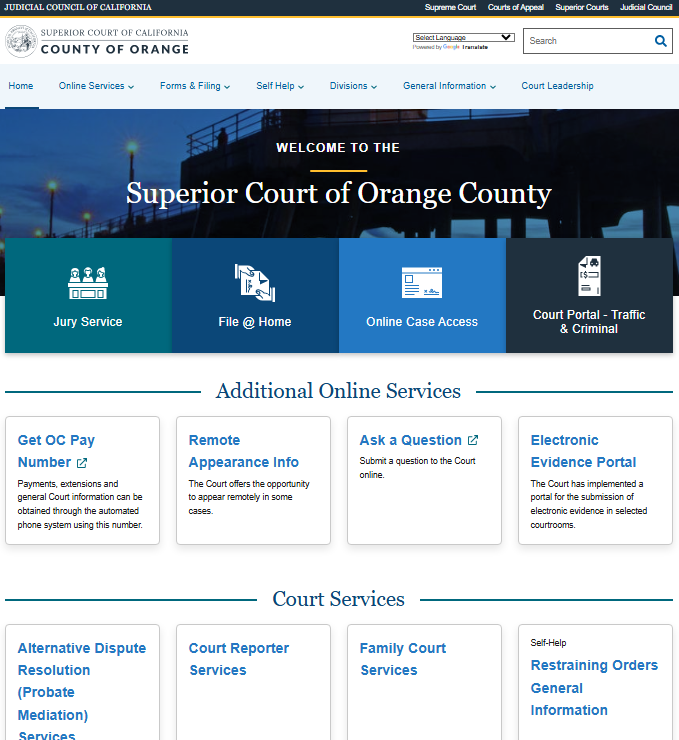
- Orange County: Provides docket access at OC Courts Online https://www.occourts.org/. Search by case number or name. Each docket lists all filings, including motions and judgments.
These systems are free to use. No registration is required for basic searches. However, downloading documents or viewing sealed records may require a fee or a court order.
Out-of-State County Access
Other states follow similar models but with different interfaces. Always use the official .gov website to avoid scams.
- Go to the county’s official court website. Look for “.gov” in the URL.
- Find the “Public Records” or “Case Search” link.
- Enter required information: name, case number, or date.
- Review results and click to view the full docket.
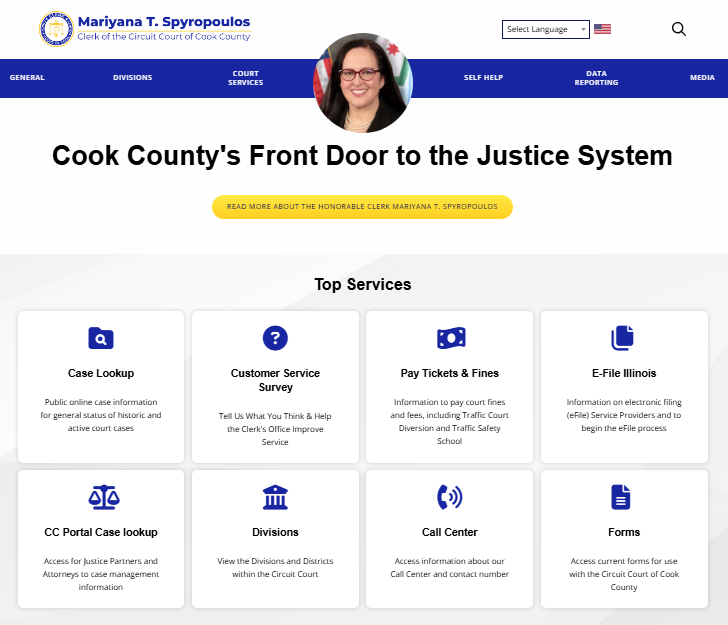
For example, in Cook County, Illinois, visit the Cook County Clerk of Courts https://www.cookcountyclerkofcourt.org/. Use the “Case Search” tool. Type a name in the “Party Name” field. Results display case number, type, and court location. Clicking a case opens the docket with all filings.
Limitations and Restrictions
Not all county records are fully online. Older cases may be on microfiche or stored offsite. Some records are restricted by law.
- Juvenile records: Sealed by law and not accessible to the public.
- Adoption records: Often confidential and require court approval to view.
- Sealed cases: Hidden from public search due to privacy or safety concerns.
- Expunged records: Removed from public databases after legal clearance.
To access restricted records, submit a formal request to the court clerk. Include a valid reason, such as legal representation or research. Approval is not guaranteed.
Federal Court Records and PACER
Federal court records are managed by the Administrative Office of the U.S. Courts and accessed through PACER. This system covers all federal district, bankruptcy, and appellate courts.
Using PACER for Case Search
PACER is the primary tool for federal court research. It requires registration and charges a small fee per page viewed.
- Go to https://pacer.uscourts.gov and create a free account.
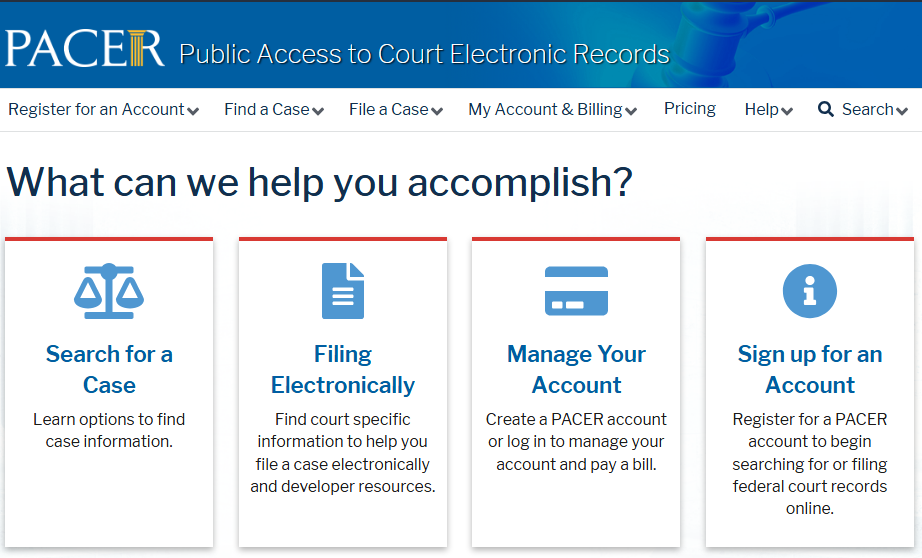
- Log in and select “Case Search” from the menu.
- Type the case number in the “Case Number” field (e.g., 1:23-cv-01234).
- Alternatively, use “Party Name Search” and enter the full name (e.g., Johnson, Michael).
- Click “Search.” The system returns a list of matching cases.
Each result shows the court, case number, parties, filing date, and status. Clicking a case opens the docket sheet. This lists every document filed, including complaints, motions, and rulings. Users can view or download PDFs for a fee of $0.10 per page.
Types of Federal Records Available
PACER contains records from all federal courts, including specialized jurisdictions.
- Bankruptcy records: Show debtor name, case type (Chapter 7, 11, 13), filing date, and discharge status.
- Civil litigation: Includes lawsuits involving federal laws, such as civil rights or antitrust cases.
- Criminal cases: Cover federal crimes like mail fraud, drug trafficking, or immigration violations.
- Appeals: Contain briefs and decisions from circuit courts of appeals.
For example, a search for “Smith, Robert” in the Southern District of New York returns all civil and criminal cases under that name. The docket shows each filing, hearing date, and judge assigned.
Alternatives to PACER
Some federal records are available for free through other sources.
- RECAP Archive: A free service that shares PACER documents uploaded by users. Visit https://www.courtlistener.com/recap.
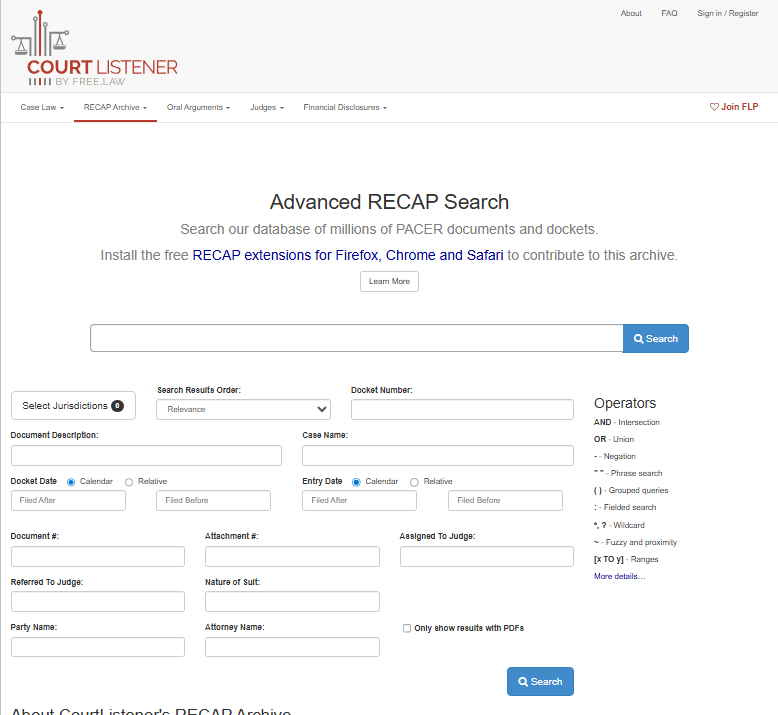
- CourtListener: Offers free access to opinions, oral arguments, and some dockets. Search by case name or citation.
- Local federal courthouses: Provide public terminals for free PACER access. No fee is charged for viewing on-site.
These tools reduce costs but may not have the most recent filings. For up-to-date records, PACER remains the official source.
Privacy and Legal Rights
Court records are public by default, but privacy laws limit access in certain cases. Understanding these rules protects both requesters and individuals named in records.
Public Access Rights
The First Amendment and state laws support the public’s right to inspect court records. This promotes transparency and accountability in the justice system.
- Most civil and criminal records are open to anyone without restriction.
- No justification is needed to request or view public records.
- Records can be used for background checks, journalism, or personal research.
However, access is not absolute. Courts may restrict records to protect privacy, safety, or ongoing investigations.
Sealed and Expunged Records
Some records are hidden from public view due to legal orders or statutory requirements.
- Sealed records: Ordered by a judge to protect sensitive information, such as trade secrets or victim identities.
- Expunged records: Legally erased after a person completes probation or meets other conditions. Not visible in standard searches.
- Juvenile records: Automatically sealed in most states. Only law enforcement or courts can access them.
To view sealed records, file a motion with the court. Explain the reason for access, such as legal representation or research. The judge decides based on public interest and privacy concerns.
State-Specific Privacy Laws
Each state has laws governing court record access. These affect what information is available and how it can be used.
| State | Key Law | Restriction |
| California | California Rules of Court, Rule 2.507 | Seals records involving minors or sensitive personal data. |
| New York | NY CPLR § 2103 | Allows sealing of records in domestic violence cases. |
| Texas | Texas Government Code § 552.001 | Provides broad access but allows redaction of personal identifiers. |
Always check state laws before using court records for employment or housing decisions. Misuse can lead to legal liability.
Obtaining Certified Copies
Certified court records are official documents with a court seal, used for legal purposes like immigration or employment verification. They require a formal request.
Request Process
Certified copies are not available through online searches. They must be requested from the court clerk.
- Identify the correct court and case number.
- Visit the court clerk’s office in person or submit a written request by mail.
- Fill out a “Request for Certified Copy” form. Include case number, parties, and document type.
- Pay the required fee, usually $15 to $25 per document.
- Provide a valid ID and proof of eligibility if required.
The clerk processes the request within 3 to 10 business days. Certified copies are mailed or picked up in person.
Document Types Available
Not all documents can be certified. Only final judgments, orders, and official filings qualify.
- Divorce decrees: Certified copies prove legal dissolution of marriage.
- Probate orders: Show inheritance rights and estate distribution.
- Criminal convictions: Used for background checks or immigration applications.
- Bankruptcy discharges: Provide debt relief under federal law.
Certified copies include the court seal, clerk’s signature, and date of certification. They are legally valid for official use.
Mail and Online Requests
Some courts allow remote requests to reduce in-person visits.
- Mail: Send a written request with a check or money order. Include a self-addressed stamped envelope.
- Online: A few courts offer e-certification through secure portals. Upload ID and pay via credit card.
- Third-party services: Companies like CourtReference https://www.courtreference.com assist with requests for a fee.
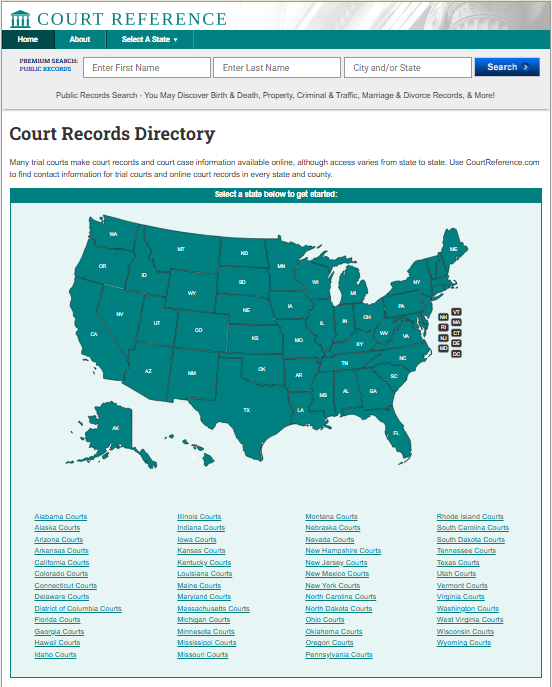
Always verify the court’s policy before submitting a request. Unauthorized services may delay processing.
Court Records for Background Checks
Employers, landlords, and agencies use court records to verify an individual’s legal history. Accuracy and compliance are essential.
Legal Use of Records
Using court records for background checks is legal but regulated by federal and state laws.
- Fair Credit Reporting Act (FCRA): Requires consent and disclosure when using records for employment.
- Ban-the-Box laws: Delay criminal history questions until later in the hiring process.
- State restrictions: Some states prohibit using expunged or dismissed cases.
Always obtain written permission before running a background check. Provide candidates with a copy of the report and a chance to dispute errors.
Common Records Checked
Background checks typically focus on specific types of court records.
- Criminal convictions: Felonies and misdemeanors that may affect job suitability.
- Civil judgments: Indicate financial responsibility or litigation history.
- Bankruptcy filings: Show debt management and financial stability.
- Restraining orders: Reveal potential safety risks.
Traffic violations and small claims are usually excluded unless job-related. Always follow industry standards and legal guidelines.
Accuracy and Disputes
Court records can contain errors. Names may be misspelled, or cases misclassified.
- Verify information with the court clerk if discrepancies exist.
- Request a correction if your record is inaccurate.
- Dispute false reports with the background check agency.
Maintaining accurate records protects both individuals and organizations from legal and reputational harm.
FAQs About Court Records
Court records are official documents generated during legal proceedings and maintained by courts at the federal, state, and county levels. These records provide detailed information about cases, including filings, hearings, judgments, and outcomes. While most court records are public and accessible, certain documents may be restricted due to privacy laws or court orders. The following FAQs explain how court records work and how to access them.
What are court records, and who can access them?
Court records are official documents created during legal proceedings, including case filings, motions, judgments, and dockets. They are maintained by federal, state, and county courts. Most records are public and accessible to anyone, including individuals, attorneys, journalists, and researchers. Access is granted without requiring a reason, as supported by the First Amendment and state open records laws. However, certain records—such as those involving minors, sealed cases, or expunged convictions—are restricted. To view restricted records, a formal request or court order is needed. Public access promotes transparency and accountability in the justice system. Records can be searched online, in person, or by mail, depending on the jurisdiction. Always use official .gov websites to ensure legitimacy and avoid scams.
How do I search for court records by name?
To search court records by name, go to the official court website for the relevant county or state. Locate the “Case Search” or “Public Access” section. In the “Party Name” field, enter the full name in last-name-first format (e.g., Smith, John). Avoid nicknames or abbreviations. Click “Search” to view results. The system returns a list of cases involving that name, showing case number, type, filing date, and status. Click a result to open the full docket. For better accuracy, include a middle initial or use a date range. In large counties like Los Angeles, name searches may return hundreds of results. Use filters to narrow the list. Always verify the spelling and check multiple spellings if unsure. This method works for civil, criminal, and family cases in most jurisdictions.
Can I get court records online for free?
Many court records are available online at no cost through official government websites. County courts in states like California, Texas, and New York offer free public access portals. For example, San Diego County provides free case searches at courtindex.sdcourt.ca.gov. Similarly, Orange County uses ocapps.occourts.org for docket access. These sites allow users to search by name or case number and view dockets without charge. However, downloading documents or obtaining certified copies usually requires a fee. Federal records on PACER cost $0.10 per page, though some documents are free via RECAP or CourtListener. Always use .gov sites to avoid fake services. Free access is limited to public records; sealed or expunged cases are not available online.
What information is included in a court docket?
A court docket is a chronological list of all actions in a case. It includes the case number, parties involved, filing date, and court location. Each entry shows the date, document type (e.g., motion, hearing, judgment), and description. For example, a docket may list “Motion to Dismiss filed on 03/15/2023” or “Hearing scheduled for 04/10/2023 at 9:00 AM.” Dockets also show the judge assigned, attorneys, and the next court date. In criminal cases, they include charge codes, bail amounts, and plea entries. Civil dockets list complaints, answers, and settlement agreements. Dockets are available online or at the courthouse. They are essential for tracking case progress and understanding legal history. Always review the full docket to see all filings and outcomes.
How do I request certified court records?
To request certified court records, first identify the correct court and case number. Visit the court clerk’s office in person or submit a written request by mail. Complete a “Request for Certified Copy” form, providing case details and document type. Pay the required fee, typically $15 to $25 per document. Include a copy of your ID and proof of eligibility if needed. The clerk processes the request within 3 to 10 business days. Certified copies include the court seal, clerk’s signature, and certification date. They are used for legal purposes like immigration, employment, or property transactions. Some courts allow mail or online requests, but in-person pickup ensures faster service. Always confirm the court’s policy before submitting.
Are expunged court records visible in searches?
No, expunged court records are not visible in standard public searches. When a record is expunged, it is legally erased or sealed by court order. This means it does not appear in online databases, background checks, or public records requests. Expungement is available for certain misdemeanors, first-time offenses, or after completing probation. The process varies by state, but generally requires filing a petition with the court. Once approved, the record is removed from public view. However, law enforcement and courts may still access it for internal purposes. Employers and landlords cannot use expunged records in decisions. Always verify expungement status with the court clerk. If a record appears despite expungement, file a correction request immediately.